The Remarkable Organization of Ant Colonies and Its Influence on Digital Design
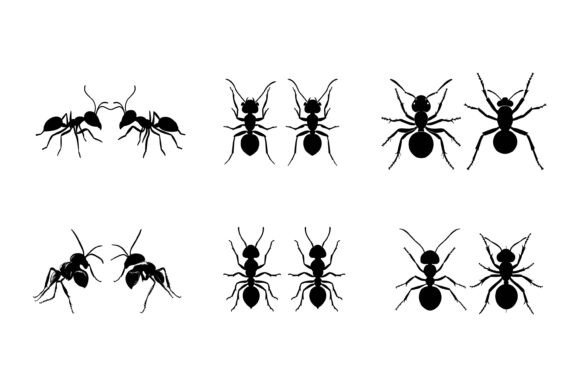
Observing an ant colony reveals a world of intricate efficiency. Thousands of individuals function as a cohesive unit, each contributing to the collective success through specialized roles, clear communication, and a shared purpose. This natural model of organization offers profound parallels to the modern need for well-structured digital resources, particularly in the realm of creative assets. The principles evident in ant behavior—neatly organized systems, perfection in details, and adaptability—directly inform the value of high-quality, editable design collections for today's diverse users.
Foundations of Collective Success: Structure and Specialization
An ant colony thrives on a clear, logical structure. Nest architecture, foraging trails, and role differentiation between workers, soldiers, and caretakers are all precisely defined. This inherent order ensures efficiency and resilience. Similarly, when dealing with digital illustration sets, the underlying file structure is paramount. A collection that boasts a neatly organized file and layer hierarchy allows users to navigate complex projects with ease, much like an ant navigates its colony. This organization is not merely cosmetic; it is foundational to productive workflow, reducing time spent searching for elements and increasing focus on creative execution.
Parallels in Digital Asset Architecture
Consider the way ants maintain distinct chambers for different functions—brood care, food storage, waste disposal. An ideal digital illustration set mirrors this compartmentalization. Layers and groups are logically separated, symbols are categorized, and editable paths are cleanly defined. This architectural clarity benefits everyone from a hobbyist creating a personal blog graphic to a professional designer building a comprehensive app interface. The time saved in deconstructing a messy file is significant, allowing energy to be directed toward customization and implementation, not forensic file exploration.
The Critical Importance of Detail and Consistency
Ant colonies exhibit a relentless attention to detail. The construction of a nest tunnel, the precision of a chemical trail, or the care given to larvae all demonstrate a commitment to consistency that ensures the colony's survival. In graphic design, this translates to perfection in details and consistency across an illustration set. Each icon, symbol, or element must adhere to a unified visual language—consistent line weights, stroke styles, and proportional relationships. This consistency is what makes a collection suitable for professional applications like print media, web design, or infographics, where visual coherence builds trust and enhances communication.
When assets are crafted with such meticulous care, they become more than just images; they become a reliable toolkit. A business owner developing a brand identity can trust that every element scales uniformly. An educator creating instructional materials can be confident that symbols are clear and recognizable. The underlying technical precision, often found in AI EPS files, ensures that details remain sharp at any size, a non-negotiable requirement for both high-resolution print and responsive web platforms.
Adaptability and Customization: The Key to Wide Application
One of the most fascinating aspects of ant behavior is adaptability. Colonies can adjust foraging patterns based on resource availability, alter nest structure in response to environmental changes, and even reassign roles under pressure. This flexibility is a core survival trait. For a digital illustration set, the equivalent trait is its editability. The true value of a collection lies in how easily you can edit it, change colors, and modify the icon so easily according to your needs. A static, locked graphic file is like a rigid, inflexible system; it serves one purpose but fails when conditions change.
Empowering a Broad User Spectrum
This adaptability directly addresses the needs of our broad audience. A marketer might need to recolor icons to match a seasonal campaign. A researcher might need to modify a symbol to represent a specific data point in an infographic. An app developer might need to adjust line styles to fit a platform's design guidelines. The fact that a collection is provided in AI EPS and JPG formats, and is designed for Mac and Windows users, removes technical barriers. The editable EPS format, native to vector software, provides the deep control needed for profound modifications, while the JPG offers immediate usability for quick placements or less technical users.
- For Professionals: Deep vector editing allows for seamless integration into existing brand systems or complex multi-page documents.
- For Creators and Hobbyists: The ability to change colors and shapes enables personal expression without requiring advanced drawing skills.
- For Educators and Business Owners: Easy modification means assets can be tailored to specific messages, audiences, or instructional goals.
Practical Applications: From Colony to Screen
The real-world relevance of a well-organized, detailed, and adaptable asset collection is vast. Just as an ant's role is defined by its utility to the colony, each icon or illustration finds its purpose in the user's project.
Consider the creation of an infographic explaining ecological interdependence. Using a set of nature-themed icons with a consistent style and easy color adjustment, a creator can quickly build a visual narrative that is both scientifically accurate and visually engaging. The organized layer structure allows for easy rearrangement as the narrative evolves. Or, imagine a small business owner developing a suite of symbols for a new mobile app. Starting from a cohesive set of app-oriented icons, they can tailor each symbol's detail to match specific app functions, ensuring a clean, intuitive user interface that feels professionally built from the ground up.
The Workflow Advantage
The initial time investment in acquiring a quality set is offset by immense workflow efficiencies downstream. This is the practical understanding every user gains. Instead of sourcing disparate icons from multiple places—each with different styles, licenses, and file structures—you begin with a unified foundation. This mirrors the efficiency of an ant colony, where standardized behaviors and communication protocols allow for rapid, coordinated action. The result for the user is a faster, more focused creative process, with more time dedicated to strategic design decisions rather than asset procurement and basic cleanup.
Final Considerations for the Informed User
Selecting digital resources requires a discerning eye, much like a biologist studying colony fitness. Key considerations extend beyond the superficial. While the immediate appeal of a broad theme is important, the long-term value is locked in the technical execution. Evaluate the promised file organization. Verify the compatibility with your operating system and core design software. Assess the consistency of the art style across the entire collection to ensure it can scale for large projects. The mention of suitability for print, web, symbols, apps, infographics is not a mere list; it is a testament to the asset's technical robustness and scalable design.
In the end, the principles we admire in nature's most organized societies—structure, detail, consistency, and adaptability—are precisely the principles that define exceptional digital tools. They empower a spectrum of individuals, from solo creators to corporate teams, to build their own visual colonies with efficiency and purpose. So what are you waiting for? The foundation for your next project, structured with the intelligence of a natural system and the precision of modern design, is ready to be explored and adapted to your unique needs.