From Vintage Hardware to Digital Design: The Old Gas Pump Symbol
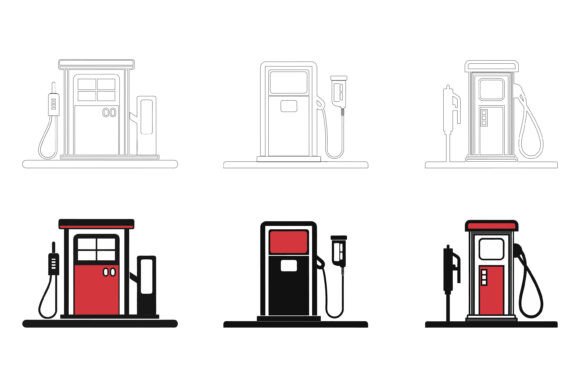
You've seen it countless times, a staple of roadside Americana. The classic old gas pump symbol—with its rounded glass globe, distinct numerals, and sturdy silhouette—is more than just a piece of history. It's a visual shorthand for fuel, service, travel, and industry. Today, this iconic symbol finds new life not on concrete islands, but in digital projects, where its nostalgic appeal and clear meaning offer powerful design utility.
Why This Symbol Resonates Across Different Audiences
The appeal of the old gas pump symbol isn't universal, but it is remarkably wide-ranging. Its significance shifts depending on who is looking at it and what they aim to accomplish.
For a marketer crafting a campaign for a classic car service or a heritage brand, it evokes authenticity and reliability. A blogger writing about road trips or economic history might use it as a perfect visual anchor. Meanwhile, a small business owner opening a retro-themed diner could see it as an essential element for their logo or signage. Its meaning is fixed, but its application is wonderfully fluid.
Conversely, a UI/UX designer working on a modern fuel price app might prioritize clarity and speed over nostalgia, potentially using a simplified version of the symbol for quick recognition. An educator creating materials about transportation evolution would value its historical accuracy. This single asset can serve multiple purposes, from decorative to functional, from evocative to instructive.
What Makes a Quality Digital Illustration of This Symbol?
When this symbol transitions from a physical object to a digital file, its value hinges on the quality and flexibility of the illustration. A well-crafted vector file, like an EPS or AI format, isn't just a picture; it's a versatile tool.
The priorities here naturally diverge. A beginner or hobbyist might prioritize ease of use—a file that is neatly organized, with layers named clearly, so they can edit without confusion. They need something that allows for simple color changes to match their project's palette without requiring deep software expertise.
For a professional graphic designer or freelancer, the stakes are higher. They demand perfection in details and consistency. The line work must be crisp, the curves smooth, ensuring the symbol looks impeccable whether printed on a large banner or displayed on a tiny mobile icon. Their need for flexibility is paramount; they must be able to deconstruct the symbol, modify elements, and integrate it seamlessly into complex layouts without the asset breaking or looking out of place.
Creators and entrepreneurs often look for long-term usefulness and commercial value. An illustration set that includes the old gas pump symbol alongside other cohesive icons provides a library they can return to for various projects—website infographics, app symbols, promotional materials—ensuring brand consistency over time. The ability to edit it freely means they own a unique asset, not just a stock photo they cannot alter.
Practical Applications in Everyday Projects
Let’s consider some concrete scenarios. A publisher producing a travel guide might place a stylized old gas pump symbol on maps to denote scenic historic stations, requiring a vector that scales perfectly for both print and ebook formats. An educator making a worksheet about 20th-century advertising could use a detailed illustration as a discussion point, valuing the accuracy of the dials and fonts.
A freelancer designing a logo for a motorcycle club might isolate just the pump's globe, combining it with other elements to create a custom emblem. Their priority is creativity and the ability to modify the icon so easily. Meanwhile, a consumer or hobbyist creating a personal blog about vintage collectibles might simply want to drop a beautiful, ready-made graphic into their header to set the tone. Their main concern is presentation and speed—getting a great look without a design headache.
Evaluating If This Asset Matches Your Specific Needs
Determining whether a specialized illustration set featuring the old gas pump symbol is right for you boils down to a few key questions about your project and workflow.
First, consider your skill level. Are you comfortable opening a vector file in software like Adobe Illustrator or Affinity Designer? If not, does the set also include a high-quality JPG for immediate use in simpler programs? A good set caters to both Mac and Windows users and offers formats for different expertise levels.
Next, think about your project type. Is it a one-time use for a single blog post, or is it a core asset for ongoing commercial work? For long-term projects, the neatly organized file and layer structure becomes critical, saving you hours over multiple uses.
Finally, reflect on your core priority. Is it cost versus unique ownership? Is it quality that won't pixelate in print? Or is it the sheer learning value of dissecting a professionally made vector to improve your own skills? For many, the defining benefit is the freedom to edit, change colors, and modify without restrictions—true creative control over a piece of visual history.
Ultimately, the old gas pump symbol stands as a bridge between a bygone era and contemporary digital creation. Its journey from a mechanical device to a malleable digital illustration reflects how our tools have evolved. Whether you're drawn to its nostalgic charm or its utilitarian clarity, a well-executed vector file transforms this icon from a static reference into a dynamic component of your creative work, ready to fuel countless ideas.