Understanding the Practical Value of the Coloured Pencils in Jar Icon Vector Set
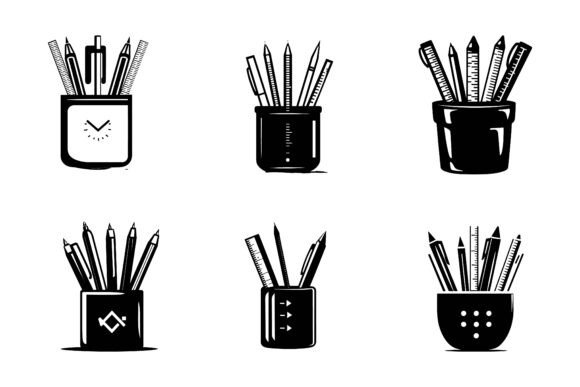
In the realm of digital illustration and graphic design, the concept of a "icon" often transcends its basic function. The Coloured Pencils in Jar Icon is not merely a simple graphic; it's a structured, professional-grade vector illustration set. At its core, it represents a specific, universally recognizable metaphor for creativity, organization, and tools, packaged in a format designed for practical utility. What distinguishes this offering from a generic stock image is its underlying structure and the deliberate design choices made to serve a professional workflow.
What Makes This EPS Illustration Set Distinct
Many designers and content creators encounter vector assets that are frustratingly rigid or poorly constructed. The defining characteristic of this Coloured Pencils in Jar Icon collection is its foundation in a meticulously organized AI and EPS file format. Unlike flattened JPEGs or PNGs, these source files contain editable paths, shapes, and layers. This means the icon is not a static picture but a malleable digital object. The "jar" and each individual "pencil" are typically separate elements, allowing for independent manipulation.
The emphasis on a neatly organized file and layer structure is a significant differentiator. In a professional setting, time spent deciphering a chaotic layer panel or merging accidental groups is time wasted. A logical structure, where elements are named and grouped intuitively, directly translates to efficiency. This organizational priority reflects an understanding of real-world use, where assets are often integrated into larger, more complex compositions or need to be adapted quickly for different applications.
Evaluating Format and Compatibility Considerations
A key factor when selecting any digital asset is its compatibility with your tools and pipeline. This set is explicitly designed for Mac and Windows users and provides files in both AI (native Adobe Illustrator) and EPS (Encapsulated PostScript) formats. This dual format approach covers a broad spectrum of use cases.
The AI file is ideal for users working within Adobe's ecosystem, allowing seamless editing with full access to Illustrator's specific features. The EPS format, however, is a more universal vector standard. It can be imported into a wider range of software, including older versions of Illustrator, CorelDRAW, Affinity Designer, and even some page layout or video editing applications that support vector import. When comparing options, the availability of both formats reduces risk; it ensures the asset remains useful even if your primary software changes in the future.
In contrast, many alternatives might offer only a single format, or provide a "vector" file that is actually a poorly exported SVG with lost detail. The inclusion of a JPG file is a pragmatic addition for quick previews or for scenarios where a high-resolution raster fallback is necessary, though the primary value lies in the editable vectors.
Analyzing Use Cases and Practical Applications
The stated suitability for print, web, symbols, apps, and infographics speaks to the versatility derived from its vector nature and detail consistency. Let's explore how these claims hold up in practical comparison.
- Print & Web: Because it is a vector, the Coloured Pencils in Jar Icon can be scaled infinitely without loss of quality. This makes it equally effective for a tiny footer icon on a website and a large poster print. A raster alternative (like a high-res PNG) would require multiple files for different resolutions, complicating asset management.
- Symbols & Apps: In UI/UX design, icons need clarity and simplicity at small sizes. The clean lines and likely defined color blocks of this set make it a candidate for interface symbols. However, its detailed, illustrative style might be more decorative than minimalist UI icons require. This is a tradeoff: it offers more visual richness but may need simplification for a pure functional icon system.
- Infographics: Here, the icon's illustrative quality is a strength. It can serve as a visual anchor for sections related to creativity, education, tools, or organization. Its editable nature means it can be color-matched to the infographic's palette easily, a task far more difficult with a fixed-color raster image.
The Tradeoffs of Editability and Consistency
The promise of easy editing—to change colors and modify the icon—is a major benefit, but it comes with an implicit requirement: the user needs access to and basic competency with vector editing software like Illustrator. For someone who only uses Photoshop or simple online tools, the EPS file might be less immediately accessible than a PNG. This is a crucial decision factor. The asset's power is unlocked only with the right tool.
Furthermore, perfection in details and consistency refers to the technical precision of the drawing—consistent line weights, closed paths, and intentional color separation. This technical quality ensures that when you edit it, the changes propagate cleanly without creating visual artifacts. Lower-quality vector assets can have stray points, overlapping shapes, or non-uniform strokes that break when manipulated. The tradeoff here is often in the initial cost or sourcing effort; finding professionally crafted vectors usually requires more selective searching than downloading free, but technically flawed, alternatives.
When This Icon Set Is the Right Fit
This Coloured Pencils in Jar Icon collection is a strong fit for specific scenarios. It aligns well with designers, marketers, or educators who:
- Operate within a professional design software environment (especially Adobe Illustrator).
- Require an asset that will be reused or adapted across multiple projects and media types (print, digital, presentations).
- Value workflow efficiency and dislike dealing with disorganized, "hacked" source files.
- Need a visually warm, metaphorical icon that conveys creativity or toolkits in a more illustrative style than a stark glyph.
- Are building branded materials where color schemes need to be applied consistently across all visual elements.
A realistic example: a small design studio creating a campaign for an art supply store. They might use the icon on the website hero section, in a printed brochure, and as decorative elements in social media tiles. Having one editable file that can be recolored to match each application's background and resized without quality loss streamlines the entire process.
When You Might Consider Another Option
Despite its strengths, this illustration set may not be the optimal choice in all circumstances. Users might need to explore alternatives if:
- Their work is exclusively in raster-based environments (like pure photo editing or certain video compositors) with no vector software.
- They require a truly minimalist, line-based icon for a technical user interface where decorative detail is a hindrance.
- The project demands a highly specific style not matching this set's likely "classic illustration" aesthetic—for instance, a need for a hyper-modern geometric or isometric design.
- The budget is severely constrained and the project is a one-time, single-use need where a free, fixed-quality raster image sourced from a stock site would suffice.
- They need an icon that is part of a much larger, comprehensive icon pack with hundreds of consistent symbols; this single-set focus might not provide the breadth required.
The decision often hinges on the balance between long-term utility and immediate need. A free PNG of colored pencils in a jar might solve today's blog post need. But if that same visual metaphor will be used repeatedly across a brand's touchpoints for years, the investment in an editable, quality vector source like this becomes more justified, avoiding repeated licensing searches and quality mismatches.
Making an Informed Decision on Vector Assets
Choosing graphic resources is rarely about finding the single "best" item. It's about matching the asset's properties to your project's requirements, your tools, and your future needs. When evaluating the Coloured Pencils in Jar Icon EPS collection, consider it as a tool rather than just a picture.
Assess your software capabilities first. Do you have and use Illustrator or a compatible vector program? Examine the scope of your project. Is this a one-off or a recurring element? Think about style cohesion. Does its illustrative warmth fit your visual language? Finally, consider the value of time. The hours saved by not having to recreate, repair, or hunt for alternative versions of a poorly made asset can often outweigh the initial cost of a professionally prepared set.
In the broader comparison of digital illustration resources, sets like this occupy a specific niche: they are focused, high-quality, single-concept vector packs designed for professional adaptation. They sit between massive, generic icon libraries and custom, commissioned illustrations. They offer a balance of specificity and flexibility, providing a ready-made solution that still allows for significant creative control. For many users navigating the middle ground between DIY design and full custom artwork, this balance is precisely what makes such collections a practical and valuable resource.