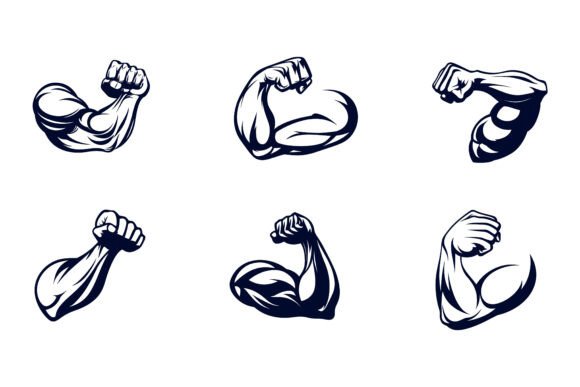
Evaluating the Tents AI EPS Illustration Collections
In digital design, the quality and flexibility of foundational assets significantly impact project efficiency and outcomes. For designers and content creators, illustration sets serve as a crucial toolkit. The Tents collections represent a specific offering of AI EPS illustration files, positioned as a resource for various professional applications. This article provides an objective evaluation of such collections, helping you determine if they align with your workflow requirements.
Understanding AI EPS Illustration Sets
An AI EPS file is a vector graphic format created and editable in Adobe Illustrator. Vector graphics are defined by mathematical paths, allowing them to be scaled infinitely without loss of resolution or quality. When a collection is described as an "AI EPS illustration set," it typically means a packaged group of such vector illustrations, often themed or stylistically consistent, provided in both the native AI/EPS formats and sometimes a raster format like JPG for quick preview.
The core value proposition lies in the editable nature of the files. Unlike static raster images, these vectors can be disassembled, recolored, reshaped, and combined to create new derivative artwork. This makes them a potential asset for organizations or individuals needing reusable visual components.
Key Features and Practical Benefits
When evaluating the Tents collections, or any similar product, several stated features warrant consideration from a practical standpoint.
File Organization and Structure
A claim of neatly organized files and layer structure is a significant operational benefit. In a complex vector file, logical layer naming and grouping can save hours of work. For a team collaborating on a project, or for a single user revisiting files months later, clear structure translates directly into time savings and reduced friction.
Cross-Platform Compatibility and Format Inclusion
Specification for both Mac and Windows users, along with the inclusion of both AI/EPS and JPG files, addresses basic compatibility concerns. The AI/EPS formats are industry standards for vector editing, while the JPG serves as a convenient reference. This dual format approach ensures the assets can be used in different stages of a workflow—from initial planning with quick JPG previews to final detailed editing in Illustrator.
Application Suitability
The stated suitability for print, web, symbols, apps, and infographics highlights the versatile nature of vector assets. Because vectors are resolution-independent, the same core file can output to a high-resolution brochure or a small mobile app icon without needing separate creations. This universality is a key advantage over raster imagery for multi-channel projects.
Potential Tradeoffs and Considerations
While the benefits are clear, a balanced evaluation requires examining potential tradeoffs and setting realistic expectations.
Detail Consistency and Style Match
"Perfection in details and consistency" is a subjective claim. The actual stylistic consistency across an entire set is a critical factor. Before commitment, users should assess if the illustration style—line weight, color palette, level of abstraction—matches their brand or project aesthetic. Even editable files require a base style that aligns with your vision to minimize extensive rework.
The Scope of Editability
While you can edit colors and modify icons, the depth of editability depends on the original construction. Some vector sets are built with simple, combined shapes that are easy to alter; others might use complex effects or meshes that are harder to modify cleanly. The promise of easy modification should be validated by examining sample files or documentation.
Learning Curve and Tool Dependency
Full utilization of AI EPS files requires proficiency in Adobe Illustrator or similar vector editing software. For users or teams without this skill set, the practical benefit diminishes. The JPG fallbacks are usable, but the core value of customization is lost. This dependency on a specific toolset is an important consideration.
Situations Where Such Collections Are a Strong Fit
Based on the typical features, certain scenarios present a strong case for utilizing a collection like the Tents AI EPS sets.
- Growing Design Teams Seeking Standardization: Teams needing to establish a unified visual library for recurring projects can benefit from a consistent set. It provides a baseline from which all team members can work, ensuring output coherence.
- Content Creators with Multi-Platform Needs: Individuals producing materials for both print and digital mediums can leverage the scalability of vectors to maintain quality across all outputs without creating multiple asset versions.
- Projects Requiring Rapid Iteration: For campaigns or applications where visual themes need quick color swaps or compositional changes—such as seasonal promotions or app UI adjustments—an editable set can speed up the iteration cycle dramatically.
When Alternatives Might Be Worth Considering
Despite the advantages, alternative solutions might be more appropriate depending on specific constraints or goals.
- For Highly Unique or Brand-Defining Visuals: If a project's success hinges on completely original, custom-tailored artwork, a pre-made set might not provide the necessary uniqueness. Commissioning custom illustration or building assets from scratch may be a better path.
- For Users with Limited Budgets and No Vector Software: If access to Illustrator is absent and the budget cannot accommodate it, simpler solutions like licensed raster image libraries or basic icon fonts might be more practical and cost-effective.
- For Single-Use, Low-Resolution Projects: If the need is for a one-time web graphic at a fixed, small size, purchasing a specialized vector set might be an overinvestment. A single high-quality raster stock image could suffice.
Practical Decision-Making Insights
To determine if the Tents collections or similar offerings align with your needs, conduct a simple audit of your current workflow.
First, assess the frequency of your need for illustrative elements. Is it a recurring need across multiple projects, or a one-off requirement? Recurring needs justify investing in a reusable library. Second, evaluate your technical capacity. Do you or your team have the software and skill to edit vector files effectively? Third, consider your style flexibility. Can your projects adopt the inherent style of the set, or must everything be tailor-made from a blank canvas?
Finally, compare the total cost of the collection against the cumulative time-cost of creating similar assets yourself or sourcing them piecemeal. Often, the calculation is not just about the purchase price, but about the value of streamlined production and consistency over time.
Aligning the Offering with Your Goals
The decision ultimately hinges on whether the asset collection serves as a true tool that enhances your process. If your goals involve improving design efficiency, maintaining visual consistency across outputs, and having the capacity to adapt assets quickly to changing requirements, then a well-constructed AI EPS illustration set like those from Tents can be a strategic resource. If your goals lean towards absolute artistic originality, operate within very narrow technical constraints, or involve only sporadic need, then your resources might be better directed elsewhere. By focusing on your specific operational needs and project parameters, you can make an objective selection that supports your professional outcomes.